




Otto Chrysler Dodge Jeep Ram of Greenwich

Blog

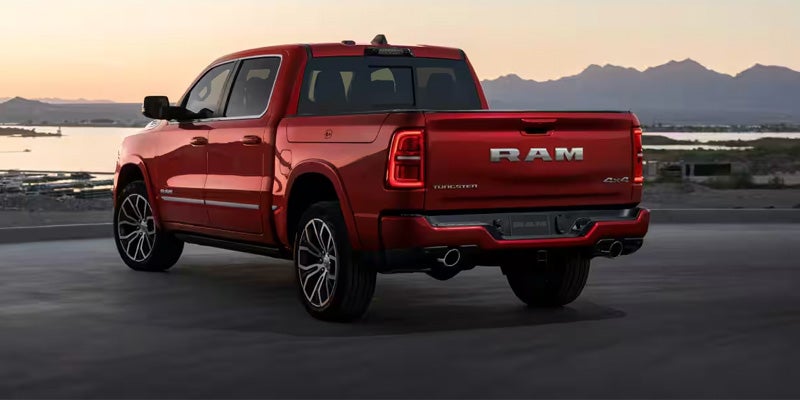
RAM 1500 vs. RAM 2500: Which 2026 Truck Is Right For You?

09 (19)

Choosing between the 2026 RAM 1500 and the 2026 RAM 2500 comes down to one simple question: do you need a truck that balances daily comfort with serious capability, or one engineered specifically for heavy-duty work? Both trucks are strong, modern, and deeply capable, but they serve very different roles. For drivers around Greenwich, NY, the differences matter. 

The Big News for 2026: The HEMI® V8 Returns 

The headline for the 2026 model year is the return of the 5.7L HEMI® V8 in the RAM 1500 lineup. Paired with the eTorque mild-hybrid system, this engine produces 395 hp and 410 lbs.-ft. of torque, delivering the familiar V8 sound and linear power delivery many truck owners missed. RAM even marks its comeback with a distinctive “Symbol of Protest” fender badge, a subtle nod to the engine’s loyal following. 

This isn’t about nostalgia alone. The HEMI’s naturally aspirated character offers predictable, usable power that feels right at home in a light-duty truck designed for real-world driving. 

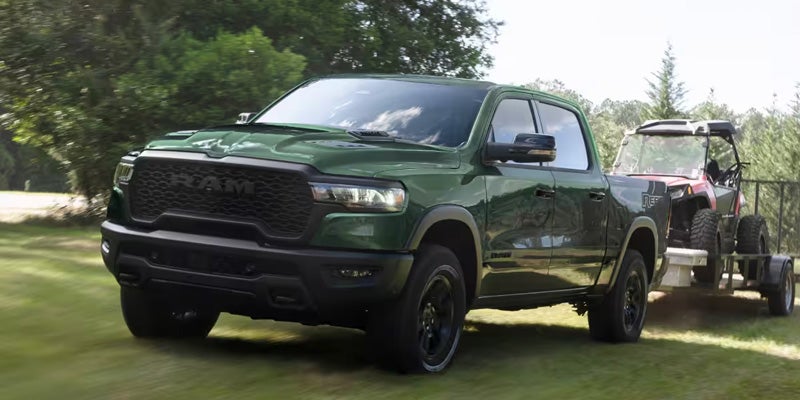
RAM 1500: Light-Duty Versatility Done Right 

The 2026 RAM 1500 continues to define the modern half-ton truck. It rides comfortably, offers one of the most refined interiors in the segment, and still delivers legitimate towing and payload capability. 

At the top of the performance ladder is the high-output 3.0L Hurricane I6, generating 540 hp and 521 lbs.-ft. of torque. This engine powers premium trims like Tungsten and performance-focused models like RHO, blending luxury and speed in a way few trucks attempt. The standard-output Hurricane I6 focuses on usable strength, enabling the RAM 1500 to tow up to 11,610 lbs. when properly equipped. 

Efficiency-minded buyers still have the 3.6L Pentastar® V6 with eTorque, producing 305 hp and supporting a maximum payload of 2,360 lbs. Inside, the RAM 1500 leans hard into comfort with available features such as a 14.5-inch touchscreen, upscale materials, and a ride quality that feels closer to a luxury SUV than a traditional pickup. 

This is the truck for drivers who want one vehicle to cover commuting, road trips, towing a boat, and weekend projects without feeling oversized or harsh. 
RAM 2500: Built for Heavy-Duty Reality 

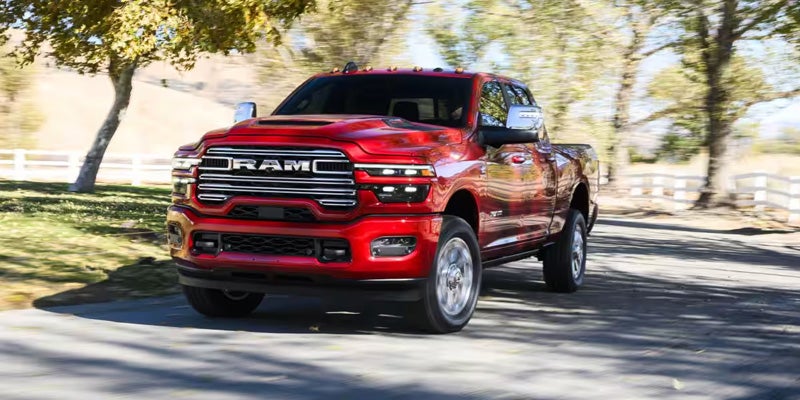
The RAM 2500 exists for workloads that go beyond recreation. A reinforced frame, heavy-duty suspension, and commercial-grade components make it clear this truck is designed for sustained towing and hauling. 

The centerpiece is the available high-output 6.7L Cummins® Turbo Diesel I6, producing 430 hp and an enormous 1,075 lbs.-ft. of torque. That output supports a maximum towing capacity of up to 20,000 lbs., placing the RAM 2500 squarely in serious work territory. For buyers who prefer gas power, the standard 6.4L HEMI® V8 delivers 405 hp and 429 lbs.-ft. of torque and actually leads the lineup in payload, capable of hauling up to 3,930 lbs. in the bed. 

For 2026, the RAM 2500 also introduces a 10-year/100,000-mile powertrain warranty, an important confidence boost for contractors, haulers, and long-term owners who rely on their truck every day. 
Performance Compared, Plain and Simple 

In real-world terms, the RAM 1500 tops out at 540 hp, tows up to 11,610 lbs, and carries up to 2,360 lbs depending on configuration. The RAM 2500 plays in a different league, delivering up to 1,075 lbs.-ft. of torque, towing as much as 20,000 lbs, and hauling nearly 4,000 lbs in the bed. 

Those numbers illustrate the divide clearly. The 1500 excels at versatility and comfort. The 2500 exists for weight, resistance, and durability. 

Which Truck Makes Sense for You? 

The RAM 1500 is the right choice for drivers who want refinement without giving up capability. The return of the 5.7L HEMI gives buyers another compelling option in an already strong lineup, especially for those who value V8 character in a light-duty truck. 

The RAM 2500 is the correct tool for heavy trailers, commercial use, and long-term towing demands. The Cummins diesel and reinforced chassis are engineered to handle stress that would overwhelm a half-ton truck. 

See the 2026 RAM Lineup in Greenwich, NY 

If you want to feel the difference firsthand, visit Otto CDJR Greenwich. Comparing the smooth strength of the RAM 1500 to the brute force of the RAM 2500 makes it clear which truck fits your work, your lifestyle, and your driveway. 

Recommended Posts

Close-up of a person signing a car contract agreement next to a blue miniature toy car, key fob, and calculator.

Dodge Financing: Is Leasing Right for You?

When it comes to getting behind the wheel of a new Dodge, most people immediately think about buying outright or taking out a traditional auto loan. But Dodge financing options go beyond a standard purchase—and leasing is one path that more Greenwich, New York drivers are choosing to explore. If you've been on the fence about whether leasing makes sense for your situation, this breakdown can help you decide. What Leasing Actually Means for Your Budget One of the biggest benefits of leasing a Dodge is the impact on your monthly budget. Lease payments are typically lower than loan payments for the same vehicle because you're only paying for the portion of the vehicle's value you use during the lease term. That means you may be able to get into a higher trim level or a more powerful model for less per month than you might expect through a traditional Dodge financing arrangement. Staying Current with the Latest Models For the enthusiast who loves staying current with Dodge’s newest performance vehicles, leasing gives you a powerful advantage. Lease terms typically run 2 to 3 years, which means you're in a consistent cycle of driving newer vehicles with the latest technology and features. For enthusiasts who want to experience everything Dodge brings to the table, from the Charger lineup to the Durango, leasing is a smart way to drive the newest, most exciting version of your favorite Dodge without a long-term commitment. Understanding Mileage and Wear Considerations Leasing isn't the perfect fit for every driver, and it's worth being straightforward about the limitations. Leases come with annual mileage caps, and going over those limits results in per-mile fees at the end of the term. If you have a long daily commute or frequently take road trips, a lease may cost more in the long run than a traditional Dodge financing option. Similarly, excess wear and tear can lead to additional charges when you return the vehicle. What Happens When the Lease Ends? At lease end, you typically have a few choices: return the vehicle, purchase it outright, or lease a new model. This flexibility is one of the benefits of leasing a Dodge that buyers often overlook. You're not locked into a single vehicle for the long haul, and you have the freedom to reassess your needs when the lease is up. For drivers in Greenwich, NY, who value flexibility and want to keep their options open, that built-in exit point can be a real advantage. Dodge Financing vs. Buying: Which Is the Better Fit? There's no universal right answer. It comes down to how you use your vehicle, how much you drive, and what matters most to your wallet. Buying makes more sense if you drive high mileage, want to customize your Dodge, or plan to keep it long-term. Leasing is a smart move if you prefer lower monthly payments, want to drive a newer vehicle every few years, and keep your mileage within reason. Either way, Dodge financing tools are available to help you build and price your next vehicle before you ever step into a dealership. Ready to Explore Your Dodge Financing Options? Whether leasing or buying is the better fit for you, the right next step is the same: explore your options with a trusted local source. At Otto CDJR Greenwich in Greenwich, NY, you can get a feel for available Dodge models, current offers, and financing paths before making any decisions. Take the time to compare, ask our team questions, and find the Dodge financing solution that matches your lifestyle and budget.

A bright blue Dodge Durango driving along a winding mountain road at dusk.

Dodge Durango vs. Nissan Pathfinder: Which SUV Is Right for You?

They’re both power players in the 3-row SUV category, but when you start comparing the Dodge Durango vs. Nissan Pathfinder, you’ll find they bring very different philosophies on what a 3-row SUV should be. Either is a strong contender for driving in Greenwich, New York, delivering family-friendly space and a solid list of features—but they take different roads to get there. Understanding where each one excels can help you make a more confident decision before you ever step onto a lot. Performance and Powertrain The Dodge Durango vs. Nissan Pathfinder comparison often comes down to how much power you actually need. The Durango is known for offering multiple engine options with strong horsepower output, giving drivers a more truck-like driving character that many families and outdoor enthusiasts appreciate. The Pathfinder takes a more fuel-conscious approach with its 3.5L V6 engine that produces 284 hp and 259 lbs.-ft. of torque on most trims, with a front-wheel drive. The more rugged Rock Creek® trim adds Intelligent 4WD and boosts output up to 295 hp and 270 lbs.-ft. of torque. The Pathfinder’s more modest engine results in about 23 MPG combined, while the Durango’s more potent engines give you much less. With the Durango’s engine options ranging from the well-rounded Pentastar® V6—which still only allows for 21 MPG combined—on up to the Supercharged HEMI® V8 with 710 hp, the Durango’s focus is clearly on powerful performance. If towing capacity is a priority for your lifestyle, the Durango holds a notable edge in that department, towing up to 8,700 lbs. vs. the Pathfinder’s 6,000 lbs. Interior Space and Comfort Both SUVs seat up to 8 passengers, but the experience inside each cabin feels quite different. The Durango leans into a more premium, performance-inspired interior with bold design touches and available leather seating, as well as significantly more 3rd-row legroom—ample for adults. The Pathfinder focuses on practicality, offering easy-fold seating that works even with a car seat installed, and family-focused storage solutions like under-floor storage. Depending on whether you prioritize style or pure utility, one will resonate more than the other. Cargo space behind the third row is competitive in both vehicles, with the Durango offering about 2” more with the 3rd row folded down, and a max of 84.5 cu. ft. to the Pathfinder’s 80.5. Either is a reasonable choice for everyday family hauling, strollers, sports equipment, and weekend trips. Technology and Safety Features Modern buyers expect a well-equipped cockpit, and both of these SUVs deliver in this area. The Durango offers up to a 10.1” responsive touchscreen, while the Pathfinder’s touchscreen is 12.3” in higher trims. Both offer wireless smartphone compatibility and premium audio systems—though the Durango goes a bit more premium, offering a 9-speaker Alpine® or 19-speaker Harman Kardon®. The Pathfinder’s available 13-speaker Bose® audio system is still an upgrade from standard systems, but the Durango’s choices are right in line with its high-performance energy. These are both family vehicles at heart, and do both deliver standard suites of driver assistance technology and a suite of connectivity features that keep everyone entertained on long drives. The Pathfinder matches up well with its own safety systems and infotainment setup. Where the Durango tends to stand out is in the depth of its available upgrades, giving buyers more room to personalize the experience across a wider range of trim levels. Off-Road and All-Weather Capability Greenwich, NY drivers deal with seasonal weather changes, so all-wheel drive capability is almost crucial. The Durango vs. Nissan Pathfinder discussion here tilts toward the Durango for buyers who want more rugged capability. The Durango's available 4WD systems and higher ground clearance make it a more capable choice when conditions get rough. The Pathfinder offers 4WD in its Rock Creek® trim, but it’s geared specifically to light trails, and the Pathfinder’s focus around on-road comfort translates into its performance. Which One Makes More Sense for Your Family? Ultimately, the right choice between the Dodge Durango vs Nissan Pathfinder depends on your priorities. If you want bold styling, strong towing capability, and a more performance-driven experience, the Durango is worth serious consideration. Both are solid options, but buyers who want more capability and character from their SUV tend to gravitate toward the Durango. Reading about these vehicles can only take you so far. The best way to settle the Dodge Durango vs Nissan Pathfinder debate is to get behind the wheel of each one and feel the difference yourself. Stop by Otto CDJR Greenwich serving Greenwich, NY, and we can help you find the trim, configuration, and features that match your lifestyle perfectly.

2026 Jeep Grand Cherokee

2026 Jeep Grand Cherokee vs. Ford Explorer: Which SUV Is Right for You?

If you're shopping for a midsize SUV and have narrowed it down to the Jeep Grand Cherokee vs. Ford Explorer, you're already looking at two strong contenders for driving in Greenwich, New York. Both offer plenty of space, modern technology, and family-friendly features—but they're built with different drivers in mind. Here's a straightforward look at how these two stack up so you can make a confident decision. more Performance and Capability When comparing the 2026 Jeep Grand Cherokee vs. Ford Explorer in terms of driving performance, the differences become clear quickly. The Grand Cherokee is well known for its off-road capability, offering a selection of 4WD systems with selectable terrain modes across all models. When equipped, the Grand Cherokee makes light work of mud, rocks, and snow, making it a strong choice for drivers who want to venture beyond paved roads. The Explorer, on the other hand, delivers a comfortable and composed ride for everyday driving. It offers available all-wheel drive and solid highway performance, but its off-road ability is more limited. If capability beyond the pavement matters to you, the Grand Cherokee holds a noticeable edge. Interior Space and Comfort Here’s where you’ll find a difference. The standard Grand Cherokee seats up to 5 passengers with its 2-row setup, while the Grand Cherokee L offers 3 rows—like the Explorer—seating up to 7. The Explorer’s standard 3-row setup is practical for larger families who regularly pack the vehicle with family and friends, though the Grand Cherokee L offers 17.2 cu. ft. of cargo space behind the 3 rd row, vs. the Explorer’s 16.3 cu. ft. If you’re looking at the 5-passengers Explorer, you’ll get 37.7 cu. ft. of cargo space for everyday use with a full vehicle, and that expands to 70.8 cu. ft. with the rear seats folded flat. Each option really caters to different needs, with the Explorer built for larger families, the Grand Cherokee L maximizing both cargo and passenger space, and the Grand Cherokee suiting families of 5 or fewer with space to fit all their stuff every day. Additionally, the Grand Cherokee focuses on premium interior quality. Higher trims like the Summit offer heated, ventilated premium leather seating throughout, open-pore wood accents, and touches like a dual-pane panoramic sunroof, creating a refined cabin that feels closer to a luxury vehicle. For Greenwich, NY drivers who spend a lot of time behind the wheel or who want luxury-first, upscale materials and a polished interior often find the Grand Cherokee delivers a more elevated experience. Technology and Safety Features The Jeep Grand Cherokee vs. Ford Explorer comparison gets interesting when you look at the tech side. The 2026 Grand Cherokee boasts a new 12.3” Uconnect® 5 NAV touchscreen as standard, providing connected navigation alongside wireless smartphone connectivity. Features like an interactive passenger display, Head-Up Display, and available McIntosh® audio system are available on upper trims, among other tech enhancements. Safety features are outstanding in the Grand Cherokee, with all trims a robust safety suite, as well as available features like Night Vision and Hands-Free Active Driving Assist. The 2026 Explorer also offers a solid tech package, including a standard 13.2” touchscreen, wireless connectivity, and Ford Co-Pilot360®, which bundles several safety features at no extra cost on most trims. Both vehicles are well-equipped, though the Grand Cherokee's available technology options tend to go further on premium configurations, including options for every member of the family right down to the class-exclusive interior camera. Towing and Everyday Utility For drivers who need to haul a trailer, a boat, or equipment, the Grand Cherokee offers a solid 7,200-lb. towing capacity, while the Explorer's towing capacity tops out at 5,600 lbs. That's a meaningful gap if towing is part of your regular routine. Both SUVs are practical daily drivers with available cargo management features and flexible seating configurations. The Grand Cherokee's available air suspension also helps it adapt to different loads and road conditions. Which One Should You Choose? The Jeep Grand Cherokee vs. Ford Explorer decision really comes down to your priorities. If you want a capable, refined SUV with strong off-road ability and available luxury features, the Grand Cherokee is hard to beat. Shoppers throughout Greenwich, NY can explore available Grand Cherokee inventory and find the trim that fits their needs at Otto CDJR Greenwich. Come by or schedule a test drive to experience the excellence of the Jeep Grand Cherokee in person.